Every tomato grower meets blight eventually. The two diseases that share the name look different, spread differently and demand different responses — and telling them apart in the first week is what saves the harvest.
Early blight: the slow one
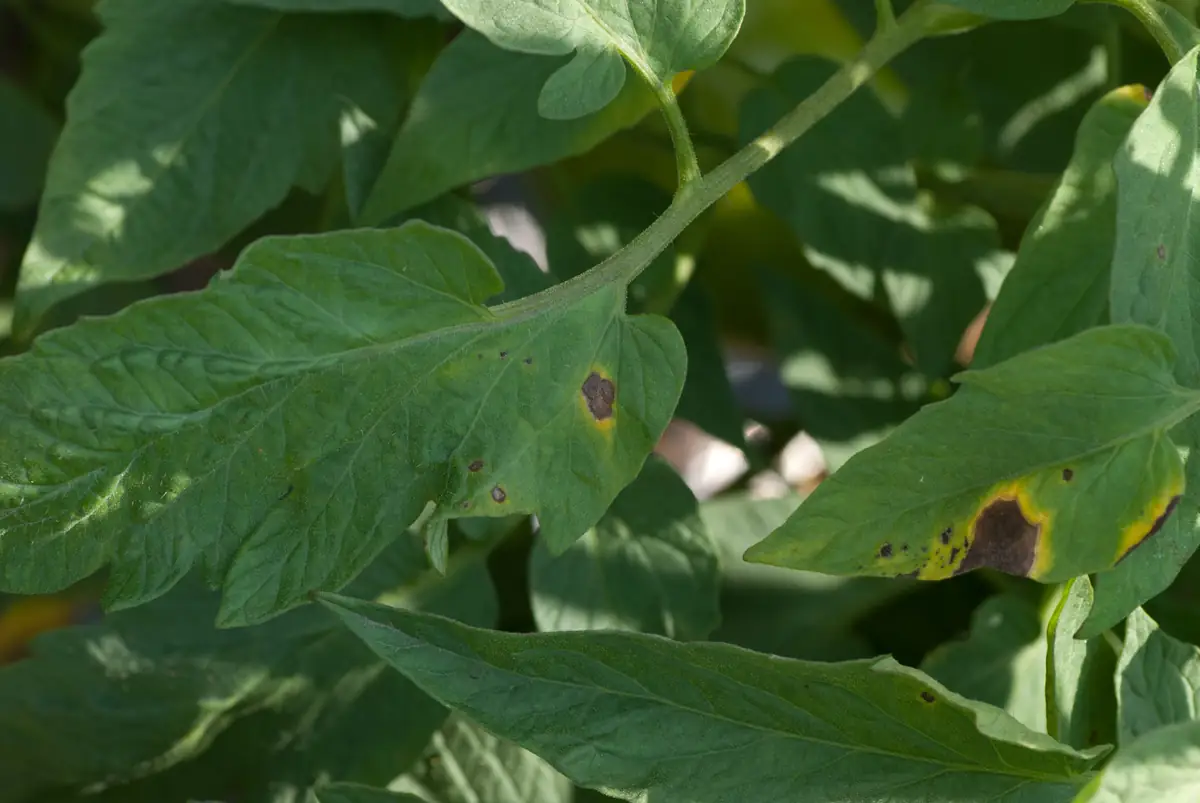
Alternaria solani arrives on the oldest, lowest leaves first. Look for dark brown spots with concentric rings — a target or bullseye pattern — often ringed by yellowing tissue. It creeps upward through the season, defoliating the plant from the bottom.
Early blight overwinters in debris and soil, which makes it a rotation problem as much as a spraying problem. Most gardens can manage it with the prevention routine below plus timely pruning.
Late blight: the fast one
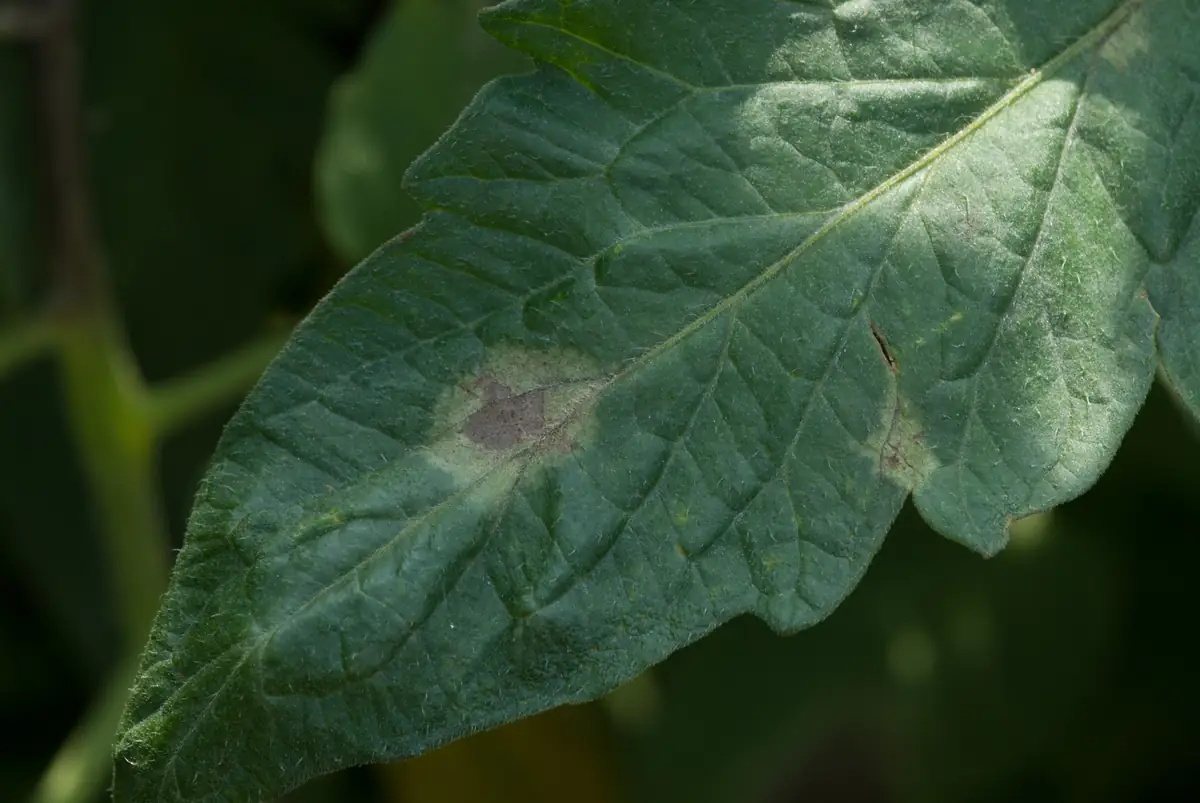
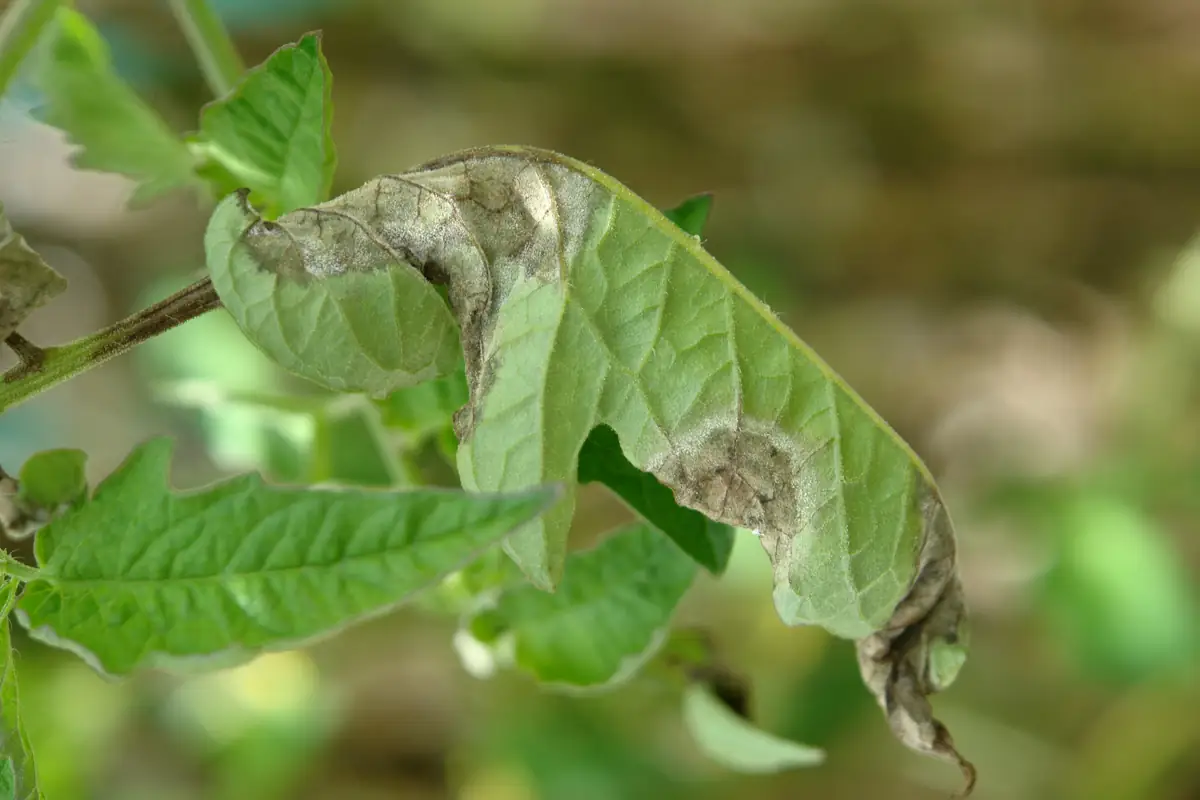
Phytophthora infestans — the organism behind the Irish potato famine — is a different league. Lesions are large, irregular, water-soaked, gray-green to brown, without target rings. On humid mornings, a white downy fuzz of spores rims the lesions on leaf undersides. Stems get dark greasy streaks; fruit gets firm brown rot. A planting can collapse in a week.
What to do this week
For early blight: strip every spotted leaf, dispose of them in the trash (not the compost pile), mulch under the plants if you have not, and protect the remaining canopy. Organic growers use fixed copper or Bacillus subtilis biofungicide weekly; conventional growers use chlorothalonil. Spray preventatively on the healthy foliage, not the removed leaves.
For late blight: move fast. Bag and trash heavily infected plants. Protect neighboring tomatoes, potatoes, peppers and eggplants with copper immediately — late blight spores travel on wind and rain splash. Check every morning after wet, mild nights (60–80°F).
The prevention routine that actually works
- Mulch at planting. Both blights splash from soil onto leaves. A 2–3 inch mulch layer is a physical shield — the mulch calculator tells you how much your beds need.
- Water the soil, not the leaves, early in the day. Wet foliage overnight is an open invitation.
- Prune for airflow and remove the bottom 12 inches of leaves once plants are established.
- Rotate: no tomatoes, potatoes, peppers or eggplant in the same spot for 3 years.
- Time it right. Planting into your actual frost and heat window keeps plants vigorous and less susceptible — the zone and frost date finder gives you those dates by ZIP.
- Choose resistant varieties. Modern hybrids carry EB and LB resistance codes on the tag.
Blight is survivable. Growers who mulch, prune and scout twice a week rarely lose a crop; growers who do not learn the target-spot pattern the hard way.