Soil & Yard

Hugelkultur: The Self-Feeding Garden Bed

Published 2026-11-28 · Updated 2026-11-28 · Soil & Yard

Hugelkultur — German for “mound culture” — buries a pile of wood under soil and lets decomposition do the watering and feeding for a decade. It converts storm-fallen branches into the most drought-proof bed you will ever grow in, and it cuts the purchased soil for a deep raised bed by a third or more.

Why wood works

Fresh logs are a battery. As fungi colonize the wood, it turns spongy, holding several times its weight in water and releasing nutrients slowly as it rots. A mature hugel bed in many climates needs irrigation only in true drought, because the core meters out moisture through dry weeks.

The layer order (bottom to top)

  1. Logs. The biggest rounds and limbs, laid tight. Any non-allelopathic hardwood or softwood works: oak, maple, apple, birch, pine, fir. Skip black walnut and freshly cut cedar in quantity (they inhibit plant growth), and skip treated lumber entirely.
  2. Branches and twigs. Fill the gaps. Water everything in — a damp core starts rotting; a dry one just sits there.
  3. Nitrogen layer. Fresh grass clippings, manure, kitchen scraps or unfinished compost. This feeds the fungi and prevents the wood from borrowing nitrogen from your plants’ root zone.
  4. Finished compost, 2–4 inches.
  5. Topsoil, 4–6 inches. Your planting medium for year one.
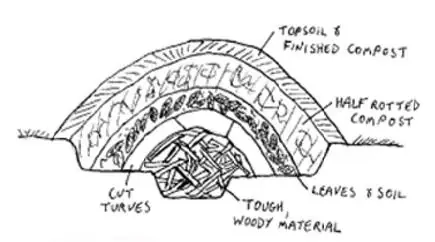
Cross-section sketch of hugelkultur bed layers showing logs at the base, branches, compost and topsoil
Layer order, bottom to top: logs, branches, leaves and compost, then topsoil. Photo: Wikimedia Commons, CC BY-SA 2.5, via Wikimedia Commons.

Build it in an afternoon

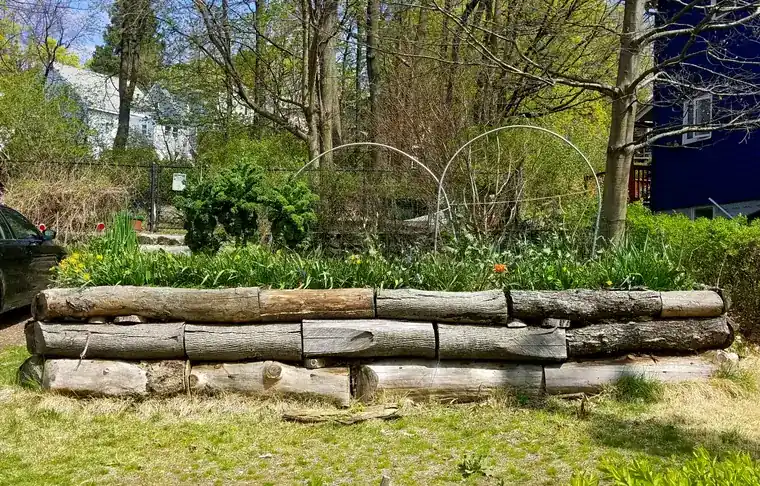
A hugelkultur raised bed under construction with a core of logs and branches before soil is added
The wood core: logs and thick branches laid directly on the ground. Photo: Daderot, CC0, via Wikimedia Commons.

Mark the bed, pile the core, soak it, stack the layers, and cap with soil. The mound will settle 20–30% in the first season — that is normal; top it up with compost each spring. Plant year one with squash, corn and shallow feeders that love the fresh nitrogen; add heavy-rooted crops from year two.

How much soil does the cap need?

Only the top 6–10 inches is purchased soil, which is the whole economic point. Run your bed’s length, width and cap depth through the raised bed soil calculator — set the depth to the soil cap, not the mound height. Finish paths between beds with wood chips or gravel (the gravel calculator sizes those), and mulch the bed surface itself per the mulch calculator.
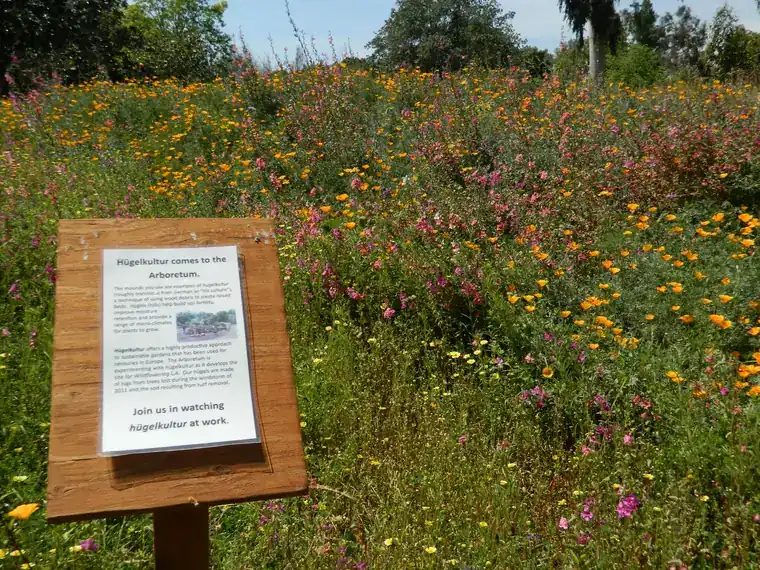
A mature hugelkultur mound bed with vigorous plant growth showing the finished profile at an arboretum
A mature hugelkultur mound: years in, the bed stays moist and feeds itself. Photo: Jengod, CC BY-SA 3.0, via Wikimedia Commons.

Frequently Asked Questions

What is hugelkultur?
Hugelkultur is a German bed-building technique that buries logs and branches under compost and topsoil. The wood acts as a long-term sponge and slow-release nutrient source, so the bed needs less water and less feeding as it ages.
What wood is best for hugelkultur?
Most hardwoods and softwoods work well: oak, maple, apple, birch, pine and fir. Avoid black walnut and large amounts of fresh cedar (both suppress plant growth), and never use painted or pressure-treated lumber.
How tall should a hugelkultur bed be?
Anywhere from 12 inches to 6 feet. Two to three feet is the sweet spot for most gardens: big enough to hold a meaningful wood core, small enough to build and plant without machinery.
Does hugelkultur attract termites?
Termites prefer dead, dry wood in contact with structures. A moist, soil-covered hugel bed planted with annuals is poor termite habitat — but keep wood-core beds a sensible distance from your house foundation, as with any buried wood.
How long until a hugelkultur bed performs?
Year one is decent (add extra nitrogen for heavy feeders), year two is good, and years three through ten are excellent as the wood core softens into sponge. It is a bed that improves with age.