Bagged potting mix is one of the garden center’s best margins. The ingredients — peat or coir, compost, perlite — cost a fraction of the finished bag, and blending your own takes twenty minutes with a wheelbarrow and a tarp. Here are the ratios that work, tuned by use.
The base recipe for containers
The classic all-purpose container blend is equal thirds by volume:
- ⅓ peat moss or coco coir — water retention and structure. Coir is the renewable option; wet and fluff compressed bricks before measuring.
- ⅓ finished compost — nutrients and biology. Use two types if you can (mushroom plus manure, for example) for a broader nutrient range.
- ⅓ perlite or pumice — drainage and air pockets. Coarse grades beat fine for big pots.
Mix on a tarp with a hoe, moistening as you go until it holds a loose ball when squeezed. That is the whole recipe.
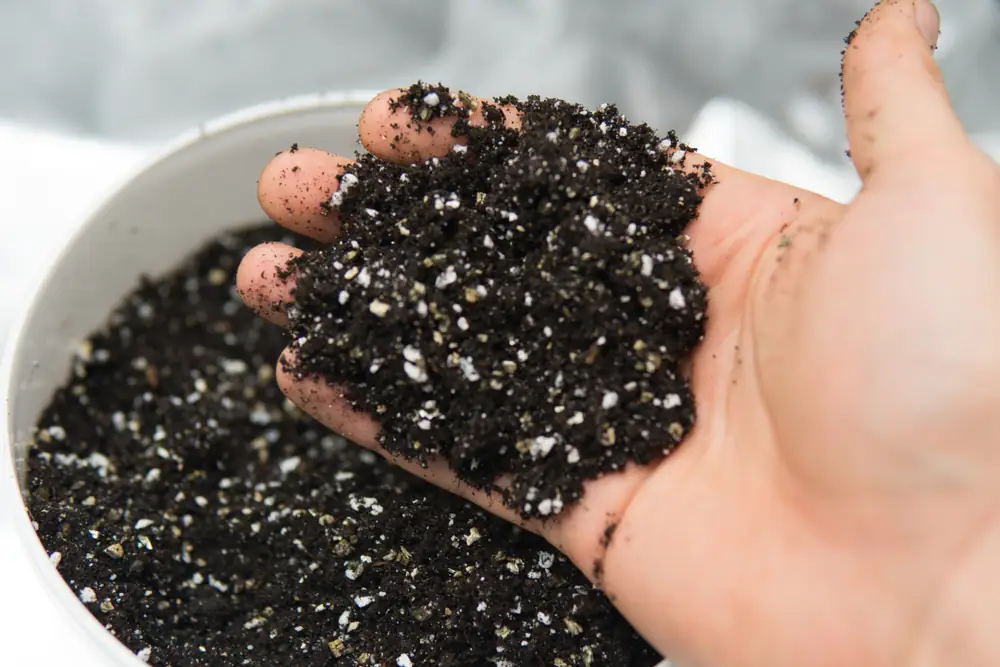
Seed-starting blend: finer and leaner
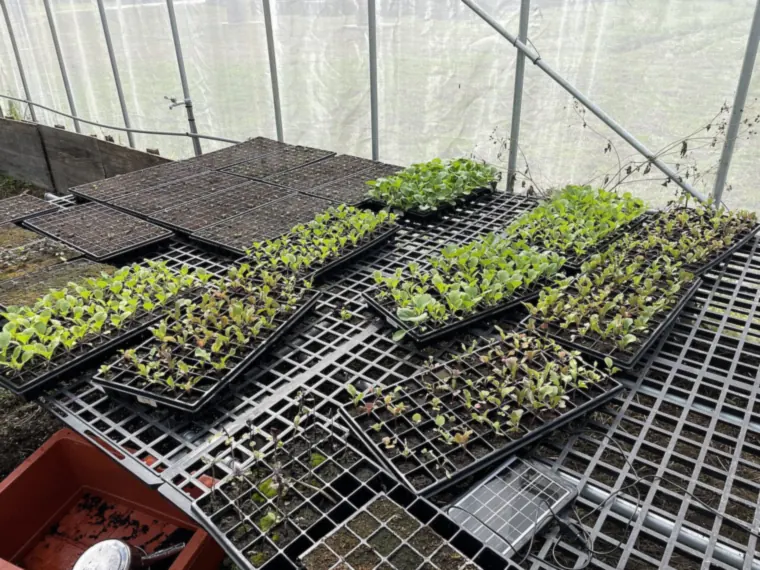
Seedlings need a finer texture and almost no nutrients — rich mixes burn germinating roots. Blend 2 parts sifted peat or coir with 1 part fine perlite or vermiculite, and sift the compost out entirely or keep it under 10%. Pre-moisten before filling trays: dry peat repels water.
Succulents and cacti: half mineral
For anything that hates wet feet, go 1 part coir or peat, 1 part compost, 2 parts perlite or coarse sand. The mix should drain a cup of water in seconds.
Feeding the mix
A homemade blend has no synthetic fertilizer, which is a feature. Add a slow-release organic fertilizer at label rates for heavy feeders like tomatoes, or top-dress with compost mid-season. Containers empty of nutrients by midsummer otherwise.
How much do you need?
Count your containers and their sizes, then total the volume. For window boxes, long planters and anything rectangular, the raised bed soil calculator gives you cubic feet and bag equivalents instantly — its Mel’s Mix thirds are the same thirds used here. For beds in the ground rather than containers, the topsoil calculator is the right tool.